
I’ve been increasingly thinking that True Dragons embody the Jungian concept of the Self in its fullest, most transcendent form. True Dragons are not just individual beings but primal forces that encompass the totality of existence, much like the Self in Jungian psychology represents the unified, integrated psyche. Like the Self, a true dragon contains all opposites (creation/destruction, material/spiritual, chaos/order), and their vast consciousness encompasses both their manifest actions and the subconscious projections that become dream dragons.
And that’s where things get interesting.
So when Orlanth fights true dragons, it is the Hero/Rebel archetype confronting the all-encompassing power of the Self, which Orlanth must overcome to assert his role as a bringer of change and freedom. The true dragon, as the Self, embodies all opposites (creation/destruction, order/chaos), and Orlanth’s victory represents a successful individuation, where the Hero integrates the dragon’s power (rain, fertility) into his identity without losing himself. This is rare among gods, as most cannot withstand the Self’s overwhelming nature, making Orlanth a mythic exemplar of transformation and agency.
Digest this for a while because there is a lot in that paragraph.
When a true dragon dreams, the subconscious projects of the Self are individualized archetypes that externalize the dreamers suppressed desires or unresolved conflicts that is both separate and yet is rooted in the true dragon’s essence. To paraphrase Jung, elements of the subconscious (like the anima/animus or complexes) can develop a degree of autonomy, acting as if they have their own personality. Dream dragons’ sentience and ego run wild with this, as they emerge from the true dragon’s dreams with their own identity and agency.
While dream dragons are transient compared to the near-eternal existence of true dragons, their “temporary” nature can still span centuries due to the vast, cosmic scale of a true dragon’s consciousness. Over centuries their prolonged existence allows them to evolve, much like a Jungian complex might grow more defined through repeated interactions with the conscious mind or external world.
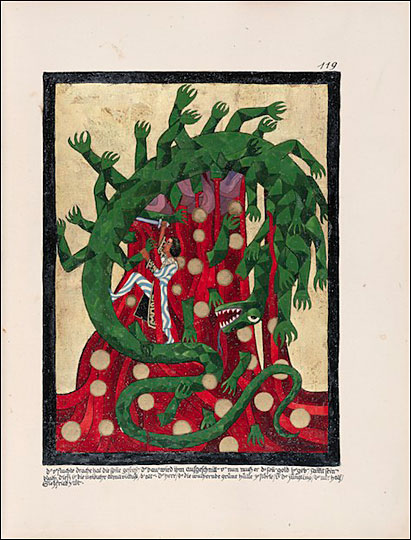


Orlanth’s role as the Hero/Rebel that confronts the Dragon represents BOTH he individuated archetype asserting its identity against the Self (the true dragon’s totality) AND the Hero’s potential to merge with the Self. Orlanth’s dual role mirrors the Jungian process of individuation, where the Hero must both confront the Self and integrate its power to achieve wholeness. The EWF’s failure suggests the peril of over-identifying with the Self, while the Old Way Traditionalists’ survival emphasizes the need to maintain individual identity.
Now Orlanth’s close association with the Trickster help explains how Orlanth can both merge with the Self (as Dragonfriend) and later disassociate from the Self (as Dragonbreaker). The Trickster, Orlanth’s companion and ally, is a boundary-breaking force that thrives on paradox, disruption, and transformation. This archetype’s influence allows Orlanth to navigate the contradictory roles of embracing and rejecting the cosmic totality of the Self with fluidity and adaptability.
To me this also help explain Orlanth’s primal connection to Dragon Pass, predating Kero Fin’s appearance (how’s that for an example of God Time!). Orlanth is so tied to Dragon Pass because he can both assert his identity against the Dragon and merge with it.
To be a Hero we need to confront the All, but it usually consumes us.